

 Esperanto
 Shqiptare
 Euskara
 Zulu
Zulu
 Latinus
 Cymraeg
 தமிழ்
தமிழ்
 Slovak
 Slovak
 Afrikaans
Focus On Hot Spots
Contact Info
E-mail: txgs@taixifilter.com
Manager Xu: +86-15097925576
Manager Feng: +86-15803195413
Address: North side of Caiyuan Village, Gexianzhuang Town, Qinghe County, Xingtai City, Hebei Province (No. 250)
Understanding the Different Types of Air Filters for Industrial Applications
Release Time:
Jan 06,2024
Table of Contents: 1. Introduction 2. Importance of Air Filters in Industrial Applications 3. Understanding Different Types of Air Filters 3.1. Fiberglass Filters 3.2. Pleated Filters 3.3. Electrostatic Filters 3.4. HEPA Filters 3.5. Activated Carbon Filters 3.6. Bag Filters 3.7. V-Bank Filters 4. Factors to Consider When Choosing an Air Filter 4.1. Filtration Efficiency
1. Introduction
2. Importance of Air Filters in Industrial Applications
3. Understanding Different Types of Air Filters
3.1. Fiberglass Filters
3.2. Pleated Filters
3.3. Electrostatic Filters
3.4. HEPA Filters
3.5. Activated Carbon Filters
3.6. Bag Filters
3.7. V-Bank Filters
4. Factors to Consider When Choosing an Air Filter
4.1. Filtration Efficiency
4.2. Pressure Drop
4.3. Dust Holding Capacity
4.4. Cost
4.5. Application-Specific Considerations
5. Applications of Different Types of Air Filters
5.1. HVAC Systems
5.2. Clean Rooms
5.3. Paint Booths
5.4. Industrial Ventilation Systems
5.5. Welding Shops
5.6. Pharmaceutical and Food Processing Industries
6. Frequently Asked Questions (FAQs)
6.1. What is the lifespan of an air filter?
6.2. How often should air filters be replaced?
6.3. Can I clean and reuse air filters?
6.4. Are HEPA filters suitable for industrial applications?
6.5. Do air filters help reduce energy consumption?
7. Conclusion
1. Introduction
In industrial applications, maintaining high air quality is crucial for the health and safety of workers, as well as the efficiency of equipment. Air filters play a vital role in removing contaminants from the air, ensuring a clean and healthy working environment. This article aims to provide a comprehensive understanding of the different types of air filters commonly used in industrial settings.
2. Importance of Air Filters in Industrial Applications
Clean air is essential for optimizing productivity, reducing equipment downtime, and safeguarding the health of employees. Air filters trap dust, pollen, mold spores, bacteria, and other harmful particles, preventing them from circulating in the air. By removing these contaminants, air filters help prevent respiratory issues, equipment damage, and contamination of products or processes.
3. Understanding Different Types of Air Filters
3.1. Fiberglass Filters
Fiberglass filters are cost-effective options commonly used in residential and light industrial applications. They consist of layered fiberglass fibers that capture larger particles. While they offer basic filtration, they are not suitable for capturing smaller particles or contaminants with higher efficiency requirements.
3.2. Pleated Filters
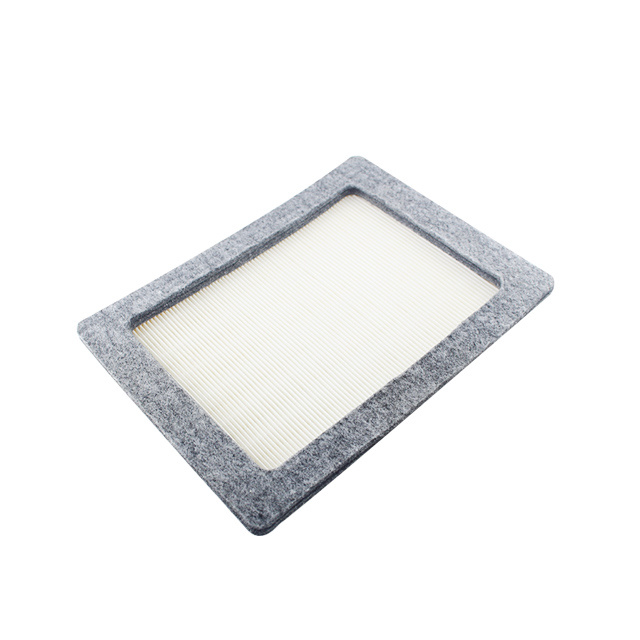
Pleated filters have a larger surface area due to their accordion-like design, allowing them to trap more particles. They are available in various filtration efficiencies and are an upgrade from fiberglass filters. Pleated filters are commonly used in commercial buildings, hospitals, and manufacturing facilities.
3.3. Electrostatic Filters
Electrostatic filters use static electricity to attract and trap particles. They are efficient in capturing smaller particles and are often washable and reusable. Electrostatic filters are suitable for industrial applications where higher filtration efficiency is required.
3.4. HEPA Filters
High-Efficiency Particulate Air (HEPA) filters are extremely efficient in capturing particles as small as 0.3 microns with a minimum efficiency of 99.97%. They are widely used in industries where air quality is critical, such as pharmaceutical, semiconductor, and clean room environments.
3.5. Activated Carbon Filters
Activated carbon filters are designed to remove odors, gases, and volatile organic compounds (VOCs) from the air. They consist of a layer of activated carbon, which chemically absorbs and neutralizes these pollutants. Activated carbon filters are commonly used in industries dealing with chemicals, solvents, or odorous substances.
3.6. Bag Filters
Bag filters are large, multi-pocket filters that can handle high air volumes. They provide a high dust holding capacity and are suitable for industrial applications with high airborne dust levels, such as cement plants, foundries, and woodworking facilities.
3.7. V-Bank Filters
V-Bank filters feature a V-shaped design with a large surface area, providing high filtration efficiency and low pressure drop. They are commonly used in HVAC systems and industrial ventilation units.
4. Factors to Consider When Choosing an Air Filter
4.1. Filtration Efficiency
The filtration efficiency of an air filter indicates its ability to capture particles of different sizes. Consider the specific contaminants you need to remove and select a filter with appropriate efficiency.
4.2. Pressure Drop
Pressure drop refers to the resistance air encounters while passing through a filter. Higher efficiency filters often have higher pressure drops. It is important to balance filtration efficiency with the acceptable pressure drop for your equipment and airflow requirements.
4.3. Dust Holding Capacity
The dust holding capacity determines how much dust an air filter can hold before needing replacement. A higher dust holding capacity reduces maintenance frequency and ensures longer filter life.
4.4. Cost
Consider the initial purchase cost and the long-term maintenance cost of the filter. Filters with higher efficiencies or specialized features may have higher costs. Evaluate the cost-effectiveness based on your specific needs.
4.5. Application-Specific Considerations
Different industrial applications have unique requirements. Consider factors such as temperature, humidity, chemical exposure, and airflow rates to ensure the selected air filter can withstand the specific conditions in your facility.
5. Applications of Different Types of Air Filters
5.1. HVAC Systems
Air filters are an integral part of HVAC systems, ensuring clean air circulation and protecting the equipment from dust and debris. The type of filter chosen depends on the specific HVAC system requirements.
5.2. Clean Rooms
Clean rooms demand the highest level of air quality. HEPA filters are commonly used in clean rooms to achieve the required particle-free environment, crucial for industries like pharmaceuticals, electronics, and biotechnology.
5.3. Paint Booths
Paint booths require filters capable of capturing overspray and volatile compounds. Filters with activated carbon and high dust holding capacity are commonly used to maintain air quality and protect the painting process.
5.4. Industrial Ventilation Systems
Industrial ventilation systems need effective air filtration to remove contaminants and ensure a safe working environment. Various filters, including bag filters and V-bank filters, are used to meet the specific industrial ventilation requirements.
5.5. Welding Shops
Welding operations produce fumes and particulates that can be harmful if inhaled. Welding shops utilize specialized filters, such as electrostatic filters and high-efficiency filters, to remove welding fumes and maintain air quality.
5.6. Pharmaceutical and Food Processing Industries
The pharmaceutical and food processing industries require clean environments to prevent contamination. HEPA filters and air filtration systems are extensively used to ensure the air quality meets stringent standards.
6. Frequently Asked Questions (FAQs)
6.1. What is the lifespan of an air filter?
The lifespan of an air filter varies depending on several factors, including the type of filter, the level of contamination in the environment, and the operating conditions. It is recommended to follow the manufacturer's guidelines for filter replacement intervals.
6.2. How often should air filters be replaced?
Air filters should be replaced according to the filter manufacturer's recommendations. However, in environments with high levels of contamination, it may be necessary to replace filters more frequently.
6.3. Can I clean and reuse air filters?
Some air filters, such as electrostatic filters, can be cleaned and reused. However, filters with disposable components, like activated carbon filters, cannot be cleaned and must be replaced when saturated.
6.4. Are HEPA filters suitable for industrial applications?
HEPA filters are widely used in various industrial applications where high air quality is essential. They are especially suitable for industries involving critical processes, such as pharmaceutical manufacturing and clean rooms.
6.5. Do air filters help reduce energy consumption?
Yes, air filters play a role in reducing energy consumption by maintaining the efficiency of HVAC systems. Clean filters allow for proper airflow, reducing strain on the system and optimizing energy efficiency.
7. Conclusion
Understanding the different types of air filters for industrial applications is essential for maintaining clean and healthy air in your facility. By selecting the right air filter based on filtration efficiency, pressure drop, dust holding capacity, and application-specific considerations, you can ensure optimal air quality and protect the well-being of your employees and equipment. Stay informed about proper filter replacement intervals and follow manufacturer recommendations for efficient air filtration in your industrial setting.
Key words:

* Please Enter Keywords
The company is mainly engaged in the manufacture and sale of auto parts and accessories in the automobile manufacturing industry, the manufacture and sale of automobile rubber products, and the import and export of auto parts.